
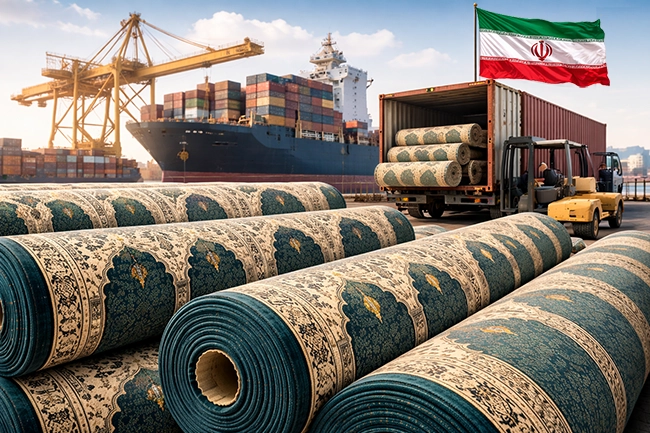
Introduction: Why Design Preferences Define Export Success in the Gulf
In carpet export, design is not a secondary consideration—it is often the decisive factor that determines whether a product succeeds or fails in a target market. This is especially true in the Persian Gulf region, where carpets are deeply connected to religious practice, architectural harmony, and cultural identity.
Countries such as Saudi Arabia, the United Arab Emirates, Qatar, Kuwait, Bahrain, and Oman share many aesthetic values shaped by Islamic art, desert architecture, and climate conditions. Buyers in these markets—whether mosque committees, hotel developers, or government procurement departments—expect carpets that align visually and symbolically with their environment.
Iranian manufacturers who understand these expectations and translate them into machine-made carpet designs gain a significant competitive advantage. As export consultant Dr. Hassan Kalhor notes in Market Adaptation in Middle Eastern Trade:
“Design conformity is often the silent language of successful regional trade.”
Why Regional Preferences Matter in Carpet Export
Unlike consumer markets where trends change rapidly, the Gulf region values consistency, tradition, and visual harmony. Carpet patterns are expected to complement architectural elements such as domes, columns, marble floors, and intricate wall tiles.
For exporters, ignoring regional preferences can result in:
- Rejected samples
- Unsold inventory
- Price pressure from buyers
- Loss of long-term distribution contracts
On the other hand, carpets designed with Gulf tastes in mind are more likely to be approved quickly, reordered frequently, and recommended across institutions. This is why successful Iranian exporters invest heavily in pattern research, regional feedback, and customizable design options.
Traditional Arabesque and Geometric Patterns
Among the most popular carpet patterns in the Persian Gulf are Arabesque and geometric designs rooted in Islamic visual language. These motifs are not merely decorative—they carry spiritual symbolism and reflect concepts of infinity, balance, and divine order.
Arabesque patterns typically feature flowing vines, floral scrolls, and interlaced shapes, while geometric designs rely on repeated polygons, stars, and symmetrical grids. Together, they create carpets that feel both decorative and spiritually grounding.
Key Features Buyers Expect
Buyers in the Gulf region consistently look for:
- Perfect symmetry that reflects balance and discipline
- Absence of figurative or human imagery
- Clearly defined borders that frame the prayer or seating area
- Repeating medallions or all-over patterns in calm, muted tones
- High clarity in pattern edges, especially in mosque carpets
Iranian manufacturers like Pamchal often develop patterns that visually echo mosque domes, mashrabiya screens, mihrabs, and tilework commonly found across Gulf cities. This architectural alignment significantly increases acceptance among religious and institutional buyers.
Popular Colors in Persian Gulf Interiors
Color selection is just as important as pattern choice. In the Gulf region, colors are chosen not only for beauty, but also for climate suitability, psychological comfort, and cleanliness perception.
Bright or overly saturated colors are generally avoided, while calm, grounded tones dominate demand—especially in mosques and public spaces.
Top Colors in Demand
Based on export data and distributor feedback, the most requested colors include:
- Sand beige and cream – ideal for bright, marble-heavy interiors
- Olive and deep green – strongly associated with Islamic symbolism
- Ocean and navy blue – calming, elegant, and visually cooling
- Maroon and gold – reserved for ceremonial or royal spaces
- Gray and turquoise blends – increasingly popular in modern mosques and hotels
These palettes age well, hide dust more effectively, and maintain visual harmony under strong artificial lighting common in large Gulf interiors.
Preferred Layouts for Mosques and Public Spaces
In mosque environments, carpet design is inseparable from functionality. Gulf buyers strongly prefer carpets with clearly defined prayer rows (saff) that help maintain order during congregational prayers.
Most requested layouts include:
- Mihrab-shaped prayer niches aligned precisely with Qibla
- Straight row separators for large prayer halls
- Repeating row units for scalability
- Minimal visual distractions between rows
Manufacturers like Pamchal respond to these needs by producing 4-meter-wide acrylic mosque carpets with pre-aligned layouts, allowing faster installation, fewer seams, and cleaner spatial organization—especially important in Friday mosques and large Islamic centers.
Blending Modern Taste with Traditional Themes
While tradition remains central, Gulf markets—particularly in cities like Dubai, Doha, Riyadh, and Abu Dhabi—are increasingly influenced by modern architectural trends. New mosque and hospitality projects often favor designs that feel lighter, more minimal, and more contemporary.
This has led to a rise in:
- Simplified Arabesque motifs
- Tone-on-tone textures
- Reduced contrast borders
- Modern color gradients within traditional frameworks
Pamchal and other forward-thinking Iranian manufacturers have adapted by creating collections that balance modern elegance with Islamic authenticity, allowing importers to serve both conservative and contemporary clients without changing suppliers.
Pattern Customization as an Export Advantage
One of the strongest advantages Iranian manufacturers hold in the Gulf market is customization capability. Buyers often request:
- Adjustments in pattern scale
- Color matching with interior materials
- Custom prayer row spacing
- Unique borders for branded or government projects
Machine-made carpet technology, when combined with experienced design teams, allows these customizations without sacrificing production efficiency. This flexibility is a key reason why Iranian carpets remain highly competitive against Turkish and European alternatives in the Gulf.
Conclusion: Design as a Long-Term Competitive Advantage
In the Persian Gulf carpet market, success is built on understanding—not imitation. Patterns that respect Islamic aesthetics, align with regional architecture, and meet functional requirements consistently outperform generic designs.
From Arabesque mosque carpets to modern geometric hotel rugs, Iranian manufacturers who invest in regional design intelligence position themselves as long-term partners rather than short-term suppliers. By offering culturally aligned, customizable, and technically sound designs, Pamchal strengthens its role as a trusted exporter across the Gulf region.