
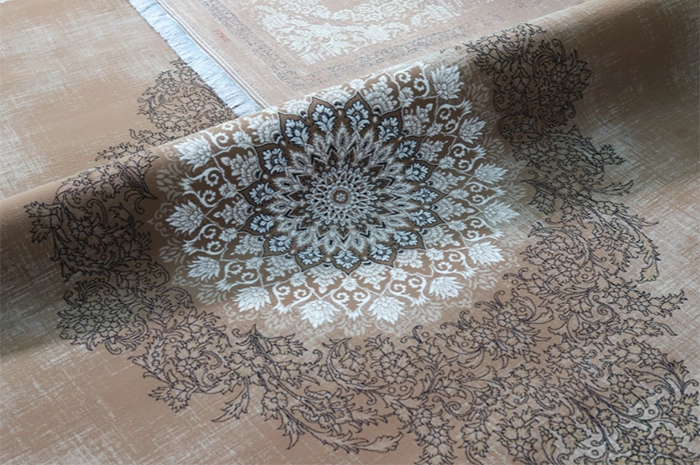
Introduction: Why Verifying 700 Reed Carpets Matters More Than Ever
In today’s competitive carpet market, especially in export-driven regions, the label “700 reed” has become a powerful selling point. Buyers associate this specification with durability, comfort, and value for money—particularly for mosque and institutional use.
However, as demand has increased, so has the number of misrepresented or counterfeit products. Many carpets are sold as “700 reed acrylic” while failing to meet basic technical standards.
For mosque committees, wholesalers, and importers, the inability to distinguish a genuine 700 reed carpet from a fake can lead to financial loss, premature wear, and reputational damage. Understanding how to properly identify authentic products is therefore essential.
Why 700 Reed Carpets Are Popular in Religious and Export Markets
700 reed carpets occupy a strategic position in the machine-made carpet spectrum. They offer a balanced combination of affordability, durability, and visual clarity, making them ideal for large prayer spaces and high-traffic areas.
With an average density of around 2550 density, these carpets feel dense and comfortable underfoot while remaining cost-effective for bulk purchases. This balance explains their widespread use in mosques, mosallas, schools, and public institutions across the Middle East, Africa, and Central Asia.
Because of their popularity, 700 reed carpets are frequently targeted by low-quality manufacturers who attempt to imitate specifications without meeting true production standards.
Understanding What “700 Reed” Really Means
The term “reed” refers to the number of knots or picks per meter across the width of the carpet. In a genuine 700 reed carpet, this translates into a specific structural density and weaving precision.
Authentic 700 reed carpets usually fall within the 2100–2550 density range, depending on loom configuration and pile height. This structure ensures adequate strength while allowing designs—such as prayer rows or mihrabs—to remain clear and well-defined.
Carpets labeled as 700 reed but produced with lower reed counts or reduced density often lack this balance, resulting in weaker structure and inferior appearance.
Key Material Differences Between Genuine and Fake 700 Reed Carpets
One of the most reliable indicators of authenticity is the type of yarn used. Genuine 700 reed carpets are typically woven with heat-set acrylic yarn, valued for its softness, resilience, and hygienic properties.
Fake alternatives often rely on polypropylene or polyester, which may appear shiny and smooth at first glance but degrade quickly under use. These materials flatten faster, retain odors, and feel plastic-like rather than textile-based.
Experienced exporters like Pamchal strictly use certified heat-set acrylic yarn, ensuring consistency in texture, color stability, and long-term performance.
Visual and Structural Signs of an Authentic 700 Reed Carpet
Design clarity is another critical indicator. In genuine 700 reed carpets, patterns—especially mosque-related elements such as mihrabs and prayer lines—appear sharp, symmetrical, and well-aligned.
Counterfeit carpets often display blurred motifs, uneven edges, or distorted lines due to insufficient density or improper loom calibration. Over time, these flaws become more pronounced as the pile compresses.
Additionally, authentic acrylic carpets feel heavier and more compact, reflecting higher yarn content and tighter construction. Fake versions may feel unusually light, loose, or hollow underfoot.
Thickness, Pile Height, and Backing Quality
A genuine 700 reed carpet maintains a balanced pile height, typically between 8–10 mm, offering comfort without sacrificing durability. Excessively thin carpets may indicate reduced yarn usage, while overly thick piles often hide structural weaknesses.
Backing quality is equally important. Authentic carpets feature strong latex backing that securely holds the knots in place. Inferior products may peel, crack, or emit unpleasant odors after a short period of use.
Pamchal ensures that each carpet includes reinforced backing and factory-grade finishing, minimizing long-term maintenance issues.
Advanced Identification Methods for Professional Buyers
For experienced buyers, additional verification methods can be useful. One such method is the burn test, performed carefully on a small fiber sample. Heat-set acrylic burns slowly and emits an odor similar to wool, while polypropylene melts rapidly and smells like plastic.
Another professional approach is requesting a technical specification sheet detailing reed count, density, yarn type, pile height, and backing composition. Reputable manufacturers readily provide this documentation as part of transparent trade practices.
Common Export Scams and Red Flags to Watch For
In export markets, mislabeling is one of the most common scams. Density or reed count may be falsely printed on the carpet backing without any technical basis.
Some suppliers also use mixed-yarn strategies, combining a small percentage of acrylic with polyester while marketing the product as “100% acrylic.” Others omit proper backing altogether to reduce costs.
Pamchal avoids these practices by supplying carpets with authentic factory labels, full specifications, and warranty-backed quality assurance, protecting buyers from these risks.
Practical Tips for Wholesale Buyers and Importers
When sourcing carpets for mosques or resale, buyers should adopt a systematic evaluation process. Requesting physical samples, reviewing detailed spec sheets, and verifying export experience are essential steps.
Working with manufacturers that have a proven export track record—along with ISO standards or internal quality control systems—significantly reduces risk.
Pamchal exports 700 reed carpets to Saudi Arabia, Oman, Iraq, and the UAE, providing full documentation, consistent quality, and long-term support for institutional clients.
Conclusion: Authenticity Protects Value and Reputation
Identifying a genuine 700 reed carpet is not merely a technical exercise—it is a critical factor in protecting investment value, durability, and buyer trust.
By understanding structural specifications, material differences, and common warning signs, importers and institutions can avoid costly mistakes and ensure long-term satisfaction.
With its commitment to transparency and certified production standards, Pamchal Carpet guarantees authenticity in every 700 reed carpet it delivers.
Contact Pamchal today to source verified, export-grade 700 reed carpets with complete technical assurance.