
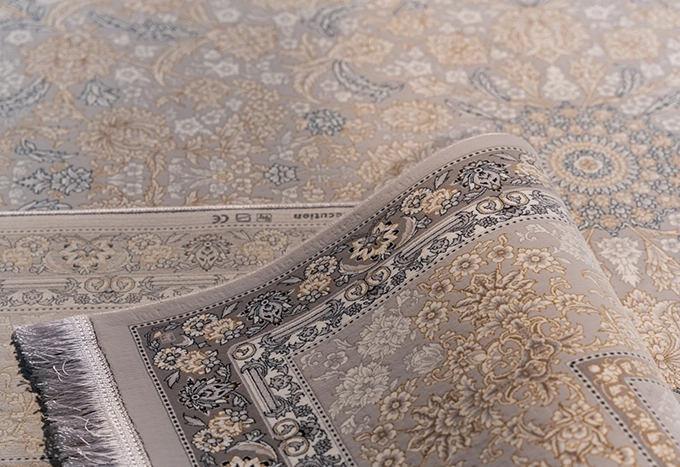
Introduction: Yarn Thickness as a Core Quality Factor in High-Reed Carpets
In high-end machine-made carpets, especially 1200 reed carpets, visual elegance and technical performance are deeply connected to one often overlooked factor: yarn thickness. While many buyers focus on reed count and density numbers, the diameter of the yarn plays a decisive role in how the carpet looks, feels, and performs over time.
For export-oriented manufacturers like Pamchal Carpet, yarn thickness is not a minor production detail—it is a strategic decision that determines softness, design clarity, durability, and even international market acceptance. Understanding this relationship helps buyers make informed choices when selecting premium carpets for mosques, VIP prayer halls, and luxury interiors.
Understanding Yarn Thickness in High-Reed Carpets
In 1200 reed machine-made carpets, each square meter contains approximately 1,500,000 knots, which means the weaving structure is extremely tight and precise. To accommodate such a dense knot arrangement, manufacturers must use fine-diameter yarns that can pass smoothly through the reed system without disrupting the pattern structure.
Using thicker yarns in this environment creates technical limitations. The yarns physically compete for space, leading to compressed knots, distorted motifs, and uneven surfaces. This is why high-reed carpets cannot rely on standard yarn thicknesses commonly used in 700 or 1000 reed products.
Pamchal addresses this challenge by using fine German heat-set acrylic yarns, carefully selected to match the reed count, loom configuration, and target pile height of 1200 reed carpets. This precision ensures structural harmony throughout the carpet.
Why Thicker Yarns Fail in 1200 Reed Structures
Attempting to use thicker yarn in a 1200 reed carpet inevitably leads to several quality compromises. First, the visual clarity of designs suffers, as fine floral, geometric, or Islamic motifs lose their sharp edges and become blurred. Second, thicker yarns create surface tension, resulting in stiffness and reduced comfort underfoot.
Additionally, excessive yarn diameter increases friction during weaving, which can cause irregular pile height and inconsistent density across the carpet surface. Over time, this uneven structure negatively affects wear patterns, especially in high-use areas like mosque prayer rows.
For these reasons, professional manufacturers avoid thick yarns in high-reed carpets altogether, opting instead for finer yarns that allow the design and structure to perform as intended.
Impact on Texture, Softness, and Tactile Experience
One of the most noticeable benefits of fine yarn in 1200 reed carpets is the exceptional surface softness. Thin, heat-set acrylic fibers bend more easily under pressure, creating a silky and smooth feel that closely resembles handmade Persian carpets.
This softness is not merely aesthetic—it directly improves comfort for worshippers in mosques and users in prayer rooms where prolonged kneeling and sitting are common. At the same time, fine yarns allow the carpet to maintain a tight weave without excessive weight, ensuring that the surface feels luxurious rather than rigid.
Pamchal’s yarn selection process balances softness with resilience, ensuring that tactile comfort does not come at the expense of performance.
Pattern Precision and Design Resolution
High-reed carpets are chosen primarily for their ability to display complex, high-resolution designs, and yarn thickness is central to this capability. Fine yarns enable sharper transitions between colors, clearer outlines in mihrab shapes, and more accurate reproduction of Islamic calligraphy and arabesque patterns.
In contrast, thicker yarns limit design resolution by occupying more space per knot, reducing the number of visual details that can be expressed within a given area. For export markets that demand refined aesthetics—such as GCC countries and Central Asia—this difference is immediately noticeable.
By combining thin yarn with high density, Pamchal ensures that every 1200 reed carpet delivers both technical precision and artistic excellence.
Durability Considerations of Thin Yarn in Dense Carpets
A common misconception among buyers is that thinner yarn equals weaker carpet. In reality, durability in machine-made carpets depends far more on density, yarn quality, and heat-setting than on yarn thickness alone.
In 1200 reed carpets, the high knot count creates a tightly reinforced structure where each knot supports the others. When thin yarns are properly heat-set, they retain excellent tensile strength and resistance to deformation.
Pamchal further enhances durability by carefully controlling pile height (typically 6–10 mm) and backing materials, ensuring that the carpet withstands heavy foot traffic in mosques, conference halls, and institutional spaces without premature wear.
Balance Between Elegance and Structural Strength
The true expertise in 1200 reed carpet production lies in achieving a balance between elegance and strength. Too thin a yarn without proper density can feel weak, while too thick a yarn compromises design clarity and comfort.
Pamchal’s production philosophy focuses on synchronizing yarn diameter, density, pile height, and loom speed into a unified system. This integrated approach results in carpets that maintain their shape, softness, and appearance even after years of continuous use.
Such balance is especially important for export projects, where buyers expect both visual refinement and long-term reliability.
Production and Export Relevance for International Buyers
In international markets—particularly the Gulf region and Central Asia—buyers increasingly request carpets that are lightweight, visually detailed, and comfortable. Thin yarns make it possible to produce carpets that meet these expectations while remaining practical for shipping and installation.
Export clients also associate finer yarns with higher quality and premium positioning, which explains why 1200 reed carpets command higher prices than lower-reed alternatives. Understanding yarn thickness helps buyers appreciate the value behind the cost difference and make confident purchasing decisions.
Pamchal’s experience in exporting to demanding markets ensures that every technical choice aligns with international standards and client expectations.
Conclusion: Yarn Thickness Defines the Identity of 1200 Reed Carpets
In 1200 reed machine-made carpets, yarn thickness is not a secondary specification—it is a defining factor that shapes appearance, comfort, durability, and market value. Fine yarns enable dense weaving, refined patterns, and a luxurious feel, all while maintaining structural integrity.
Through its careful selection of high-grade heat-set acrylic yarns and precise production control, Pamchal Carpet delivers 1200 reed carpets that meet the highest aesthetic and functional standards of global buyers.
Contact Pamchal today to learn more about premium 1200 reed carpets and receive expert guidance for your next export or mosque project.